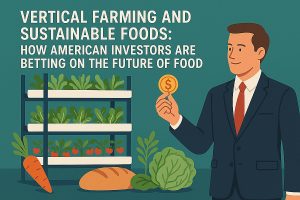
Investments in innovative agricultural techniques are reshaping the food landscape in the United States. A prime example is vertical farming, a modern approach that aims to revolutionize food production. By stacking layers of crops vertically, these farms maximize space usage and create sustainable food sources.
This method is particularly attractive to American investors who see it as a solution to traditional farming challenges, such as land scarcity and climate change. As awareness grows about the environmental impact of traditional agriculture, vertical farming is gaining prominence as a sustainable alternative.
Innovative approaches in vertical farming
One of the most exciting aspects of vertical farming is its ability to produce fresh food using less water and pesticides. The controlled environment within these farms enables crops to grow efficiently, regardless of weather conditions. This technology, often housed in urban settings, reduces the distance food travels, thus lowering carbon emissions.
With a growing urban population and limited farmland, vertical farming presents a viable solution for sustainable nutrition. The concept is appealing to forward-thinking investors, who are betting on its potential to address food scarcity and improve food quality.
Advantages driving investor interest
Investors are particularly attracted to vertical farming due to its adaptability and potential for high returns. Though initial setup costs can be steep, the long-term savings, coupled with the ability to grow multiple crops throughout the year, offer lucrative prospects. Technology plays a crucial role in these operations, with advancements like LED lighting and hydroponic systems enhancing crop yields.
Moreover, these farms use up to 95% less water than traditional methods, making them a compelling option for regions facing water limitations. Investors see these technological advancements as keys to transforming agriculture and contributing to a more sustainable future.
Future possibilities and a sustainable vision
The future of vertical farming looks promising as it continues to innovate and expand. As technology improves and costs decrease, this farming method may become more mainstream, broadening its impact on global food security. Furthermore, the integration of smart technology and data analytics can optimize growth patterns and resource usage, making vertical farms even more efficient.
While vertical farming alone won’t solve all agricultural problems, it represents a vital piece of the sustainable food puzzle. As more investors recognize its potential, this method could play a pivotal role in feeding the world’s growing population responsibly.
👉 Also read: Digital Fractional Real Estate: How Americans Are Investing in Properties Through Tokenization